Supported Indicators
McClellan Oscillator
Introduction
The McClellan Oscillator is a market breadth indicator which was developed by Sherman and Marian McClellan. It is based on the difference between the number of advancing and declining periods.
To view the implementation of this indicator, see the LEAN GitHub repository.
Using MOSC Indicator
To create an automatic indicator for McClellanOscillator, call the MOSCmosc helper method from the QCAlgorithm class. The MOSCmosc method creates a McClellanOscillator object, hooks it up for automatic updates, and returns it so you can used it in your algorithm. In most cases, you should call the helper method in the Initializeinitialize method.
public class McClellanOscillatorAlgorithm : QCAlgorithm
{
    private Symbol _symbol,_reference;
    private McClellanOscillator _mosc;

    public override void Initialize()
    {
        _symbol = AddEquity("QQQ", Resolution.Daily).Symbol;
        _reference = AddEquity("SPY", Resolution.Daily).Symbol;
        _mosc = MOSC([_symbol, _reference]);
    }

    public override void OnData(Slice data)
    {

        if (_mosc.IsReady)
        {
            // The current value of _mosc is represented by itself (_mosc)
            // or _mosc.Current.Value
            Plot("McClellanOscillator", "mosc", _mosc);
            // Plot all properties of abands
            Plot("McClellanOscillator", "emafast", _mosc.EMAFast);
            Plot("McClellanOscillator", "emaslow", _mosc.EMASlow);
            Plot("McClellanOscillator", "addifference", _mosc.ADDifference);
        }
    }
}
class McClellanOscillatorAlgorithm(QCAlgorithm):
def initialize(self) -> None:
self._symbol = self.add_equity("QQQ", Resolution.DAILY).symbol
self._reference = self.add_equity("SPY", Resolution.DAILY).symbol
self._mosc = self.mosc([self._symbol, self._reference])
def on_data(self, slice: Slice) -> None:
if self._mosc.is_ready:
# The current value of self._mosc is represented by self._mosc.current.value
self.plot("McClellanOscillator", "mosc", self._mosc.current.value)
# Plot all attributes of self._mosc
self.plot("McClellanOscillator", "ema_fast", self._mosc.ema_fast.current.value)
self.plot("McClellanOscillator", "ema_slow", self._mosc.ema_slow.current.value)
self.plot("McClellanOscillator", "ad_difference", self._mosc.ad_difference.current.value)To create an automatic indicator for McClellanOscillator using universe constituents, call the MOSCmosc helper method from the QCAlgorithm class. The MOSCmosc method creates a McClellanOscillator object, hooks it up for automatic updates, and returns it so you can used it in your algorithm. In this case, you should call the helper method in the OnSecuritiesChangedon_securities_changed method.
public class McClellanOscillatorAlgorithm : QCAlgorithm
{
    private Universe _universe;
    private McClellanOscillator _mosc;

    public override void Initialize()
    {
        SetStartDate(2024,1,1);
        SetEndDate(2024,12,31);
        UniverseSettings.Resolution = Resolution.Daily;
        UniverseSettings.Schedule.On(DateRules.MonthStart());
        _universe = AddUniverse(Universe.ETF("SPY"));
    }

    public override void OnSecuritiesChanged(SecurityChanges changes)
    {
        _mosc = MOSC(_universe.Selected);
    }

    public override void OnData(Slice data)
    {

        if (_mosc.IsReady)
        {
            // The current value of _mosc is represented by itself (_mosc)
            // or _mosc.Current.Value
            Plot("McClellanOscillator", "mosc", _mosc);
            // Plot all properties of abands
            Plot("McClellanOscillator", "emafast", _mosc.EMAFast);
            Plot("McClellanOscillator", "emaslow", _mosc.EMASlow);
            Plot("McClellanOscillator", "addifference", _mosc.ADDifference);
        }
    }
}
class McClellanOscillatorAlgorithm(QCAlgorithm):
def initialize(self) -> None:
self.set_start_date(2024,1,1)
self.set_end_date(2024,12,31)
self.universe_settings.resolution = Resolution.DAILY
self.universe_settings.schedule.on(self.date_rules.month_start())
self._universe = self.add_universe(self.universe.etf('SPY'))
def on_securities_changed(self, changes: SecurityChanges) -> None:
self._mosc = self.mosc(list(self._universe.selected))
def on_data(self, slice: Slice) -> None:
if self._mosc.is_ready:
# The current value of self._mosc is represented by self._mosc.current.value
self.plot("McClellanOscillator", "mosc", self._mosc.current.value)
# Plot all attributes of self._mosc
self.plot("McClellanOscillator", "ema_fast", self._mosc.ema_fast.current.value)
self.plot("McClellanOscillator", "ema_slow", self._mosc.ema_slow.current.value)
self.plot("McClellanOscillator", "ad_difference", self._mosc.ad_difference.current.value)For more information about this method, see the QCAlgorithm classQCAlgorithm class.
You can manually create a McClellanOscillator indicator, so it doesn't automatically update. Manual indicators let you update their values with any data you choose.
Updating your indicator manually enables you to control when the indicator is updated and what data you use to update it. To manually update the indicator, call the Updateupdate method. The indicator will only be ready after you prime it with enough data.
public class McClellanOscillatorAlgorithm : QCAlgorithm
{
    private Symbol _symbol,_reference;
    private McClellanOscillator _mcclellanoscillator;

    public override void Initialize()
    {
        _symbol = AddEquity("QQQ", Resolution.Daily).Symbol;
        _reference = AddEquity("SPY", Resolution.Daily).Symbol;
        _mcclellanoscillator = new McClellanOscillator(19, 39);
        _mcclellanoscillator.Add(_symbol);
        _mcclellanoscillator.Add(_reference);
    }

    public override void OnData(Slice data)
    {
        if (data.Bars.TryGetValue(_symbol, out var bar))
            _mcclellanoscillator.Update(bar);
        if (data.Bars.TryGetValue(_reference, out bar))
            _mcclellanoscillator.Update(bar);

        if (_mcclellanoscillator.IsReady)
        {
            // The current value of _mcclellanoscillator is represented by itself (_mcclellanoscillator)
            // or _mcclellanoscillator.Current.Value
            Plot("McClellanOscillator", "mcclellanoscillator", _mcclellanoscillator);
            // Plot all properties of abands
            Plot("McClellanOscillator", "emafast", _mcclellanoscillator.EMAFast);
            Plot("McClellanOscillator", "emaslow", _mcclellanoscillator.EMASlow);
            Plot("McClellanOscillator", "addifference", _mcclellanoscillator.ADDifference);
        }
    }
}
class McClellanOscillatorAlgorithm(QCAlgorithm):
def initialize(self) -> None:
self._symbol = self.add_equity("QQQ", Resolution.DAILY).symbol
self._reference = self.add_equity("SPY", Resolution.DAILY).symbol
self._mcclellanoscillator = McClellanOscillator(19, 39)
self._mcclellanoscillator.add(self._symbol);
self._mcclellanoscillator.add(self._reference);
def on_data(self, slice: Slice) -> None:
bar = slice.bars.get(self._symbol)
if bar:
self._mcclellanoscillator.update(bar)
bar = slice.bars.get(self._reference)
if bar:
self._mcclellanoscillator.update(bar)
if self._mcclellanoscillator.is_ready:
# The current value of self._mcclellanoscillator is represented by self._mcclellanoscillator.current.value
self.plot("McClellanOscillator", "mcclellanoscillator", self._mcclellanoscillator.current.value)
# Plot all attributes of self._mcclellanoscillator
self.plot("McClellanOscillator", "ema_fast", self._mcclellanoscillator.ema_fast.current.value)
self.plot("McClellanOscillator", "ema_slow", self._mcclellanoscillator.ema_slow.current.value)
self.plot("McClellanOscillator", "ad_difference", self._mcclellanoscillator.ad_difference.current.value)For more information about this indicator, see its referencereference.
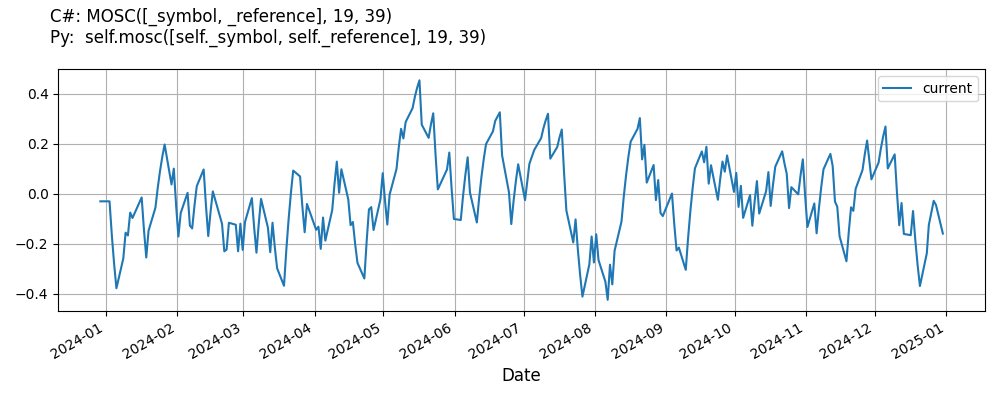
Indicator History
To get the historical data of the McClellanOscillator indicator, call the IndicatorHistoryself.indicator_history method. This method resets your indicator, makes a history request, and updates the indicator with the historical data. Just like with regular history requests, the IndicatorHistoryindicator_history method supports time periods based on a trailing number of bars, a trailing period of time, or a defined period of time. If you don't provide a resolution argument, it defaults to match the resolution of the security subscription.
public class McClellanOscillatorAlgorithm : QCAlgorithm
{
    private Symbol _symbol,_reference;
    private McClellanOscillator _mosc;

    public override void Initialize()
    {
        _symbol = AddEquity("QQQ", Resolution.Daily).Symbol;
        _reference = AddEquity("SPY", Resolution.Daily).Symbol;
        _mosc = MOSC([_symbol, _reference]);

        var indicatorHistory = IndicatorHistory(_mosc, new[] { _symbol, _reference }, 100, Resolution.Minute);
        var timeSpanIndicatorHistory = IndicatorHistory(_mosc, new[] { _symbol, _reference }, TimeSpan.FromDays(10), Resolution.Minute);
        var timePeriodIndicatorHistory = IndicatorHistory(_mosc, new[] { _symbol, _reference }, new DateTime(2024, 7, 1), new DateTime(2024, 7, 5), Resolution.Minute);

        // Access all attributes of indicatorHistory
        var eMAFast = indicatorHistory.Select(x => ((dynamic)x).EMAFast).ToList();
        var eMASlow = indicatorHistory.Select(x => ((dynamic)x).EMASlow).ToList();
        var aDDifference = indicatorHistory.Select(x => ((dynamic)x).ADDifference).ToList();
    }
}
class McClellanOscillatorAlgorithm(QCAlgorithm):
def initialize(self) -> None:
self._symbol = self.add_equity("QQQ", Resolution.DAILY).symbol
self._reference = self.add_equity("SPY", Resolution.DAILY).symbol
self._mosc = self.mosc([self._symbol, self._reference])
indicator_history = self.indicator_history(self._mosc, [ self._symbol, self._reference ], 100, Resolution.MINUTE)
timedelta_indicator_history = self.indicator_history(self._mosc, [ self._symbol, self._reference ], timedelta(days=10), Resolution.MINUTE)
time_period_indicator_history = self.indicator_history(self._mosc, [ self._symbol, self._reference ], datetime(2024, 7, 1), datetime(2024, 7, 5), Resolution.MINUTE)
# Access all attributes of indicator_history
indicator_history_df = indicator_history.data_frame
ema_fast = indicator_history_df["emafast"]
ema_slow = indicator_history_df["emaslow"]
ad_difference = indicator_history_df["addifference"]You can also see our Videos. You can also get in touch with us via Discord.
Did you find this page helpful?
